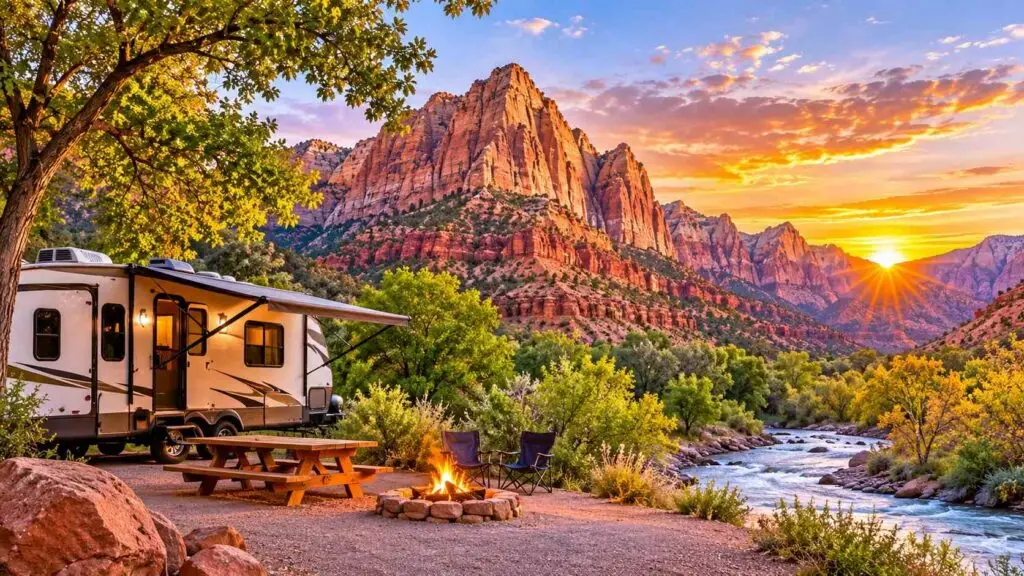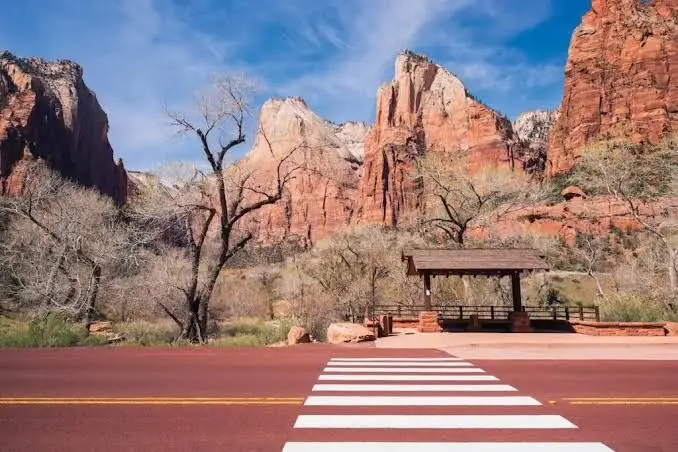
Utah RV camping sites fall into four main types: national park campgrounds, state park campgrounds, private RV resorts and free dispersed camping on public land. For a first trip to Southern Utah, the easiest choice is usually a private RV resort or a state park with full hookups, since national park campgrounds like Zion’s Watchman Campground offer electric only, book out months ahead and have strict length limits. Before you go, check your rig’s size against Zion’s 2026 vehicle limits, book spring and fall dates early, and plan for summer heat with a site that has 30 or 50 amp power so you can run your AC.
Southern Utah is one of the best RV destinations in the country. The red rock, the wide-open highways and the five national parks within a day’s drive make it feel built for road trips. But if it’s your first time, the choices can be confusing. Do you need hookups? Can your rig fit in the park? What happens if the campground is full?
This guide walks you through the basics so you can pick the right site, avoid the common mistakes and spend more time enjoying the views.
Types of Utah RV Camping Sites
National Park Campgrounds
Camping inside a national park puts you right next to the trails. The trade-off is limited services. At Zion, Watchman Campground is the main option for RVs. It has 95 electric sites, but no water or sewer at individual sites. There’s a dump station, and generators aren’t allowed. Reservations open months ahead and the best dates go quickly.
South Campground, also in Zion Canyon, has no hookups at all and is open seasonally.
State Park Campgrounds
Utah’s state parks are a great middle ground. Several in Southern Utah offer full or partial hookups, paved sites and showers. Sand Hollow State Park near Hurricane has full-hookup sites beside a red-sand reservoir, and Snow Canyon State Park near St. George has hookup sites surrounded by lava flows and sandstone. Kodachrome Basin, closer to Bryce Canyon, is another favorite. Book through Utah State Parks, and expect popular parks to fill up early in spring and fall.
Private RV Resorts and Parks
Private RV parks usually offer the most comfort and flexibility. You’ll typically find full hookups, pull-through sites for big rigs, Wi-Fi, laundry and amenities like pools or dog parks. They’re also more likely to have space when park campgrounds are full. For first-timers, this is often the least stressful option.
BLM and Dispersed Camping
Utah has millions of acres of public land where you can camp for free. On Bureau of Land Management land, dispersed camping is generally allowed for up to 14 days, with no fees or permits in most areas. There are no hookups, restrooms or water, so you’ll need a self-contained RV, plenty of water and a plan for waste. It’s rewarding, but it’s usually better as a second or third trip, once you know your rig.
Quick Comparison
| Type | Hookups | Cost | Best For |
|---|---|---|---|
| National park campground | Electric only (some sites) | Low | Being close to trails |
| State park campground | Full or partial at many parks | Low to moderate | Scenery with some comforts |
| Private RV resort | Full hookups | Moderate to higher | First-timers, big rigs, comfort |
| BLM dispersed camping | None | Free | Experienced, self-contained RVers |
RV Sites Near Zion National Park: What First-Timers Should Know
Zion is the top stop for most RV trips in Southern Utah, and it’s also where first-timers run into the most surprises.
Campgrounds inside the park fill up fast. Watchman’s electric sites are some of the hardest reservations to get, especially from March through October. If you didn’t book months ahead, plan to stay outside the park.
There are no full hookups inside Zion. You can plug in at Watchman, but you’ll fill your fresh tank and dump your tanks elsewhere. For a longer stay, that gets old quickly.
You can’t drive your RV up Zion Canyon. Zion Canyon Scenic Drive is closed to private vehicles while the park shuttle runs, which is most of the year. Most RVers park at their campground or in Springdale and ride the free shuttle.
Staying nearby is often easier. Springdale, La Verkin and Hurricane all have private RV parks within a short drive of the south entrance. Towns like La Verkin and Hurricane also tend to have more space for big rigs and easier highway access from I-15.
Driving Your RV to Zion: The 2026 Vehicle Size Limits
This is the most important update for anyone planning an RV trip to Zion.
Starting June 7, 2026, the park began enforcing size and weight limits on the Zion–Mount Carmel Highway between Canyon Junction and the East Entrance, the stretch that includes the famous tunnel. According to the National Park Service, single vehicles over these limits are not allowed on that road:
- Length: 35 feet 9 inches
- Width: 7 feet 10 inches
- Height: 11 feet 4 inches
- Weight: 50,000 pounds
For vehicles towing a trailer, total length can’t exceed 50 feet, and the trailer can’t be longer than 26 feet from hitch to rear axle. Width and height limits are the same.
The old tunnel escort permit is gone. If your rig is over any limit, you can’t drive that route at all. In practice, that rules out most large motorhomes and fifth wheels.
What this means for your trip:
- Measure your rig, including mirrors, before you go.
- If you’re over the limits, enter Zion from the south through Springdale and take an alternate route around the park to reach Bryce Canyon or the east side.
- The south entrance, Watchman Campground and Springdale are all reachable without driving the restricted section.
Coming from I-15, the easiest approach for big rigs is SR-17 or SR-9 through La Verkin and Hurricane to Springdale.
Understanding Hookups: Full, Partial and Dry Camping
If you’re new to RVing, the hookup terms can be confusing. Here’s what they mean:
- Full hookups: Electric, water and sewer at your site. You can run the AC, take showers and empty your tanks without moving.
- Partial hookups: Usually electric and water, or electric only. You’ll need a dump station for your tanks.
- Dry camping (boondocking): No hookups. You rely on your batteries, solar, generator, fresh water tank and holding tanks.
30 amp vs. 50 amp: Most smaller RVs use 30 amp service. Larger rigs with two air conditioners usually need 50 amp. In a Southern Utah summer, when temperatures regularly top 100°F, having enough power for your AC is a big deal. Check which service your RV uses and book sites that match.
When to Go RV Camping in Southern Utah
- Spring (March–April): Mild days, cold nights and rising crowds. Book early.
- Summer (May–September): Hot, with highs often over 100°F and monsoon storms from July to September. Full hookups and 50 amp service help a lot.
- Fall (October–November): Many RVers’ favorite season, with comfortable temperatures. October is busy, November quieter.
- Winter (December–February): Quiet and mild compared with most of the country. Many RVers come south for longer winter stays.
For a closer look at each season, the Zion seasons guide from the NPS is a reliable starting point.
How to Choose the Right RV Site in Utah
When comparing RV sites in Utah, check these before you book:
- Length and site type. Confirm the site fits your rig and tow vehicle. Pull-through sites are much easier for first-timers than back-in sites.
- Hookups and amps. Match the power to your rig, and decide whether you need sewer at the site.
- Level pads. Concrete or paved pads make setup faster and keep you level without a pile of blocks.
- Distance to where you’re going. A site 20 minutes from Zion with easy parking can save more time than one 5 minutes away in a crowded town.
- Pet rules. If you’re traveling with dogs, look for a fenced dog area and check breed or number limits. Our guide on what to check before booking a pet-friendly RV park covers this in detail.
- RV age rules. Some private resorts require approval for older RVs, often those over 10 years old.
- Stay limits. Many resorts cap stays at 29 days, with longer stays offered in certain seasons. If you’re planning an extended trip, see our tips on choosing a long-term RV park in Utah.
- Fire rules. Many resorts don’t allow open campfires, and wildfire restrictions are common in summer. Propane fire pits are often allowed.
First-Timer Tips for RV Camping in Southern Utah
- Carry more water than you think you need. Towns can be far apart, and the desert is dry.Fill up on fuel whenever you can. Gas stations thin out quickly on rural highways.
- Watch the wind. Afternoon gusts can be strong in open desert. Retract your awning when you leave the site.
- Expect dust. Keep windows closed on dirt roads and bring a small broom for the floor.
- Plan around the heat. In summer, hike early, rest in the AC at midday and head back out in the evening.
- Download offline maps. Cell service drops out in canyons and on back roads.
- Book early for spring and fall. These are the busiest seasons for RV sites near Zion.
Luxury RV Sites Near Zion: When the Upgrade Is Worth It
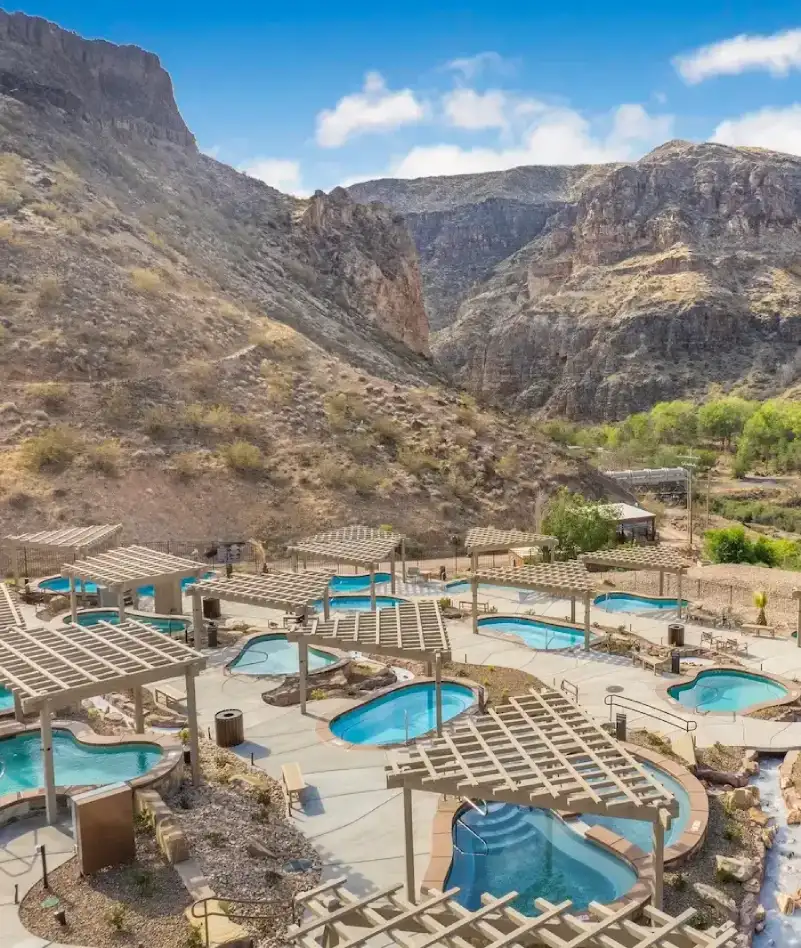
If it’s your first big RV trip, a luxury RV resort can take a lot of stress out of the experience. You’ll get easy pull-through access, full hookups, level pads and amenities that make downtime enjoyable, especially on hot afternoons.
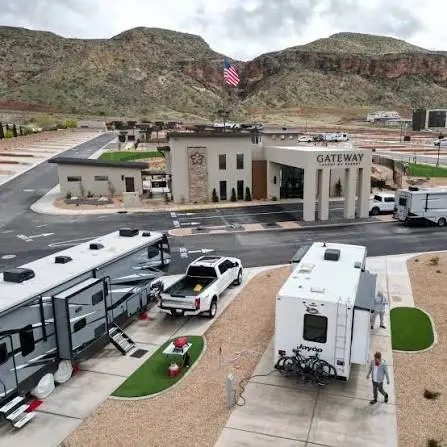
Gateway Luxury RV Resort in La Verkin, about 20 minutes from Zion’s south entrance, has 81 big-rig-friendly sites, including 31 pull-throughs. Every site has a 16-foot-wide leveled concrete pad, a grass patio area, full hookups and 20, 30 or 50 amp service. The resort also has a pool, hot tub, pickleball courts, an off-leash dog park, laundry, a general store and free Wi-Fi. Easy access from I-15 at Exit 27 means you can avoid tight roads entirely.
Traveling with friends or family who don’t have an RV? Gateway also offers private casitas, so everyone can stay together. Still deciding between an RV trip and a hotel? Our comparison of RV camping vs. hotel stays can help.
Frequently Asked Questions
Do I need reservations for RV camping in Utah?
For national park and state park campgrounds, yes, especially from March through October. Private RV resorts also fill up during peak seasons. Dispersed camping on BLM land doesn’t require reservations.
Can I take my RV through the Zion tunnel?
Only if your vehicle is within the 2026 limits: 35 feet 9 inches long, 7 feet 10 inches wide, 11 feet 4 inches tall and 50,000 pounds or less. Trailer combinations must be 50 feet or less in total. Larger rigs must use other routes around the park.
Are there full hookup RV sites inside Zion National Park?
No. Watchman Campground offers electric hookups only, with a dump station on site. For full hookups, you’ll need a private RV park or state park outside Zion.
What’s the best time of year for RV camping in Southern Utah?
Spring and fall offer the most comfortable weather. Winter is quiet and mild, which makes it popular with snowbirds. Summer works if your site has reliable power for air conditioning.
Is free RV camping allowed in Utah?
Yes. Dispersed camping is allowed on most BLM land, usually for up to 14 days in one spot. There are no services, so you’ll need to be fully self-contained.
Start Your Southern Utah RV Trip on the Right Foot
Your first RV trip to Southern Utah doesn’t have to be complicated. Pick the type of site that fits your rig and comfort level, check Zion’s vehicle limits before you plan your route, and book early for spring and fall. With the right base, every day can start with red rock and end with a comfortable night’s rest.
Ready to plan your stay? Check our rates, explore our amenities or contact our team to reserve your site