Introduction: Unveiling the Mysteries of Southern Utah’s Hoodoos
If you’re planning a trip to Southern Utah, you’re likely to stumble upon one of the region’s most captivating natural wonders: the hoodoos. These unique, thin spires of rock, often resembling giant mushrooms or chimneys, are a hallmark of Utah’s breathtaking landscapes.
The Toadstool Hoodoos, located within the Grand Staircase-Escalante National Monument, are a prime example of these natural sculptures. Situated off Highway 89, about 45 miles east of Kanab, Utah, and roughly 30 minutes northwest of Page, Arizona, these hoodoos offer an enchanting escape into nature’s artistry.
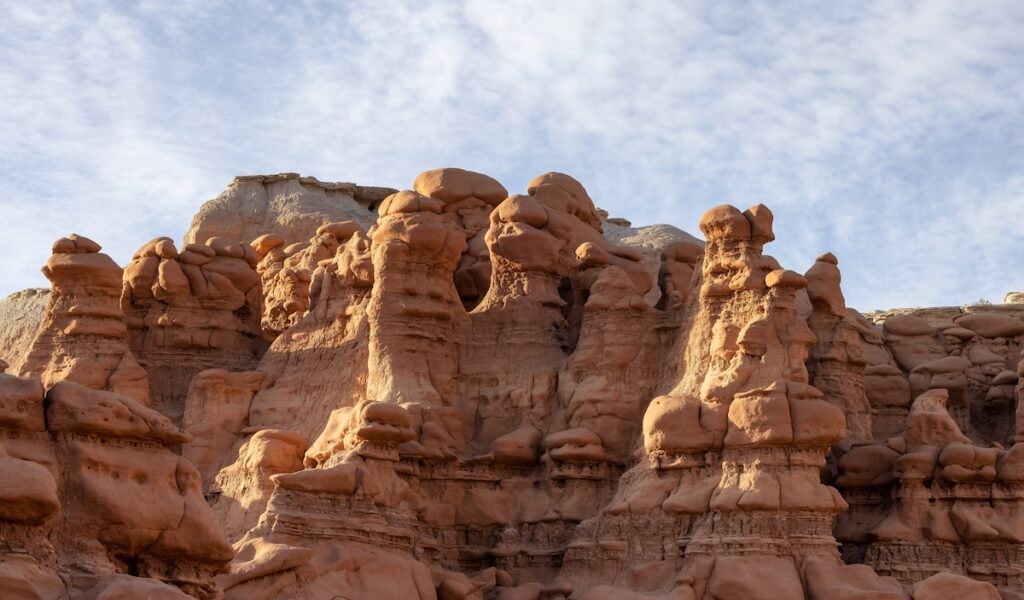
Imagine walking through a desert landscape dotted with vibrant red, orange, and white rock formations, surrounded by the expansive skies of Southern Utah. The Toadstool Hoodoos trail, a short and family-friendly hike, allows you to get up close and personal with these geological marvels.
This 1.8-mile round-trip hike is easy to navigate and offers stunning views, making it an ideal stop for anyone exploring the region’s natural attractions, whether you’re heading to Bryce Canyon National Park, Zion National Park, or other nearby wonders.
The allure of the hoodoos lies not only in their surreal beauty but also in the solitude and tranquility they offer. Unlike some of the more crowded national parks, the Toadstool Hoodoos often provide a peaceful and almost exclusive experience, allowing you to immerse yourself in the natural beauty of Southern Utah fully. Many visitors find this escape into nature’s quiet grandeur better than hotel accommodations, as it offers an unmatched sense of connection to the landscape.
As you explore these unique rock formations, you’ll find yourself in a world that feels almost otherworldly, a testament to the incredible geological history of the region.
Formation and Geology: How Hoodoos Come to Be
The Role of Weathering and Erosion
The formation of hoodoos is a complex and ongoing process, heavily influenced by the relentless forces of weathering and erosion. At the heart of this process is the interplay between frost wedging and chemical weathering.
In regions like Bryce Canyon National Park, the high elevation exposes the rocks to a unique climate characterized by frequent freeze-thaw cycles. During the winter, water seeps into the cracks in the rock and freezes, expanding by almost 10% and exerting pressure on the surrounding rock. This expansion gradually widens the cracks, a process known as frost wedging, which over time weakens the rock and contributes significantly to the formation of hoodoos.
In addition to frost wedging, chemical weathering plays an important role. Rainwater, even when crystal clear, contains slight amounts of carbonic acid due to its reaction with carbon dioxide.
This weak acid slowly dissolves the limestone grains, rounding the edges of the hoodoos and giving them their distinctive lumpy and bulging profiles. The combination of these weathering processes continuously erodes the softer layers of rock, while the harder capstones protect the underlying material, allowing the hoodoos to maintain their shape for a period of time.
The Geological Ingredients
The geological composition of the area is another critical factor in the formation of hoodoos. Typically, hoodoos form in areas where a thick layer of relatively soft rock, such as mudstone, poorly cemented sandstone, or tuff (consolidated volcanic ash), is overlain by a thin layer of harder, more resistant rock like well-cemented sandstone, limestone, or basalt.
If you’re planning a trip to Southern Utah, you’re likely to stumble upon one of the region’s most captivating natural wonders: the hoodoos. These unique, thin spires of rock, often resembling giant mushrooms or chimneys, are a hallmark of Utah’s breathtaking landscapes.
The Toadstool Hoodoos, located within the Grand Staircase-Escalante National Monument, are a prime example of these natural sculptures. Situated off Highway 89, about 45 miles east of Kanab, Utah, and roughly 30 minutes northwest of Page, Arizona, these hoodoos offer an enchanting escape into nature’s artistry.
Imagine walking through a desert landscape dotted with vibrant red, orange, and white rock formations, surrounded by the expansive skies of Southern Utah. The Toadstool Hoodoos Trail is an easy hike, just 1.8 miles round trip, allowing you to get up close and personal with these geological marvels. Hiking in the desert requires preparation—be sure to carry plenty of water, wear a hat, and apply sunscreen to protect yourself from the sun.
This 1.8-mile round-trip hike is easy to navigate and offers stunning views, making it an ideal stop for anyone exploring the region’s natural attractions, whether you’re heading to Bryce Canyon National Park, Zion National Park, or other nearby wonders.
The allure of the hoodoos lies not only in their surreal beauty but also in the solitude and tranquility they offer. Unlike some of the more crowded national parks, the Toadstool Hoodoos often provide a peaceful and almost exclusive experience, allowing you to immerse yourself in the natural beauty of Southern Utah fully. Many visitors find this escape into nature’s quiet grandeur better than hotel accommodations, as it offers an unmatched sense of connection to the landscape.
As you explore these unique rock formations, you’ll find yourself in a world that feels almost otherworldly, a testament to the incredible geological history of the region.
Formation and Geology: How Hoodoos Come to Be
The Role of Weathering and Erosion
The formation of hoodoos is a complex and ongoing process, heavily influenced by the relentless forces of weathering and erosion. At the heart of this process is the interplay between frost wedging and chemical weathering.
In regions like Bryce Canyon National Park, the high elevation exposes the rocks to a unique climate characterized by frequent freeze-thaw cycles. During the winter, water seeps into the cracks in the rock and freezes, expanding by almost 10% and exerting pressure on the surrounding rock. This expansion gradually widens the cracks, a process known as frost wedging, which over time weakens the rock and contributes significantly to the formation of hoodoos.
In addition to frost wedging, chemical weathering plays an important role. Rainwater, even when crystal clear, contains slight amounts of carbonic acid due to its reaction with carbon dioxide.
This weak acid slowly dissolves the limestone grains, rounding the edges of the hoodoos and giving them their distinctive lumpy and bulging profiles. The combination of these weathering processes continuously erodes the softer layers of rock, while the harder capstones protect the underlying material, allowing the hoodoos to maintain their shape for a period of time.
The Geological Ingredients
The geological composition of the area is another critical factor in the formation of hoodoos. Typically, hoodoos form in areas where a thick layer of relatively soft rock, such as mudstone, poorly cemented sandstone, or tuff (consolidated volcanic ash), is overlain by a thin layer of harder, more resistant rock like well-cemented sandstone, limestone, or basalt.
This layered structure is essential because the harder rock acts as a protective cap, shielding the softer rock beneath from erosion. As the softer rock is eroded away, the harder capstone remains, supporting the hoodoo and giving it its characteristic shape.
In some cases, the protective capstones can be fortified by minerals such as magnesium, which forms dolomite, a type of limestone that dissolves at a much slower rate than regular limestone. This slower dissolution rate helps protect the weaker limestone underneath, making some hoodoos more durable and longer-lasting.
The varied mineral composition within the rock layers also influences the color and texture of the hoodoos, adding to their unique and often vibrant appearance.
Unique Hoodoo Formations: Nature’s Sculptural Masterpieces
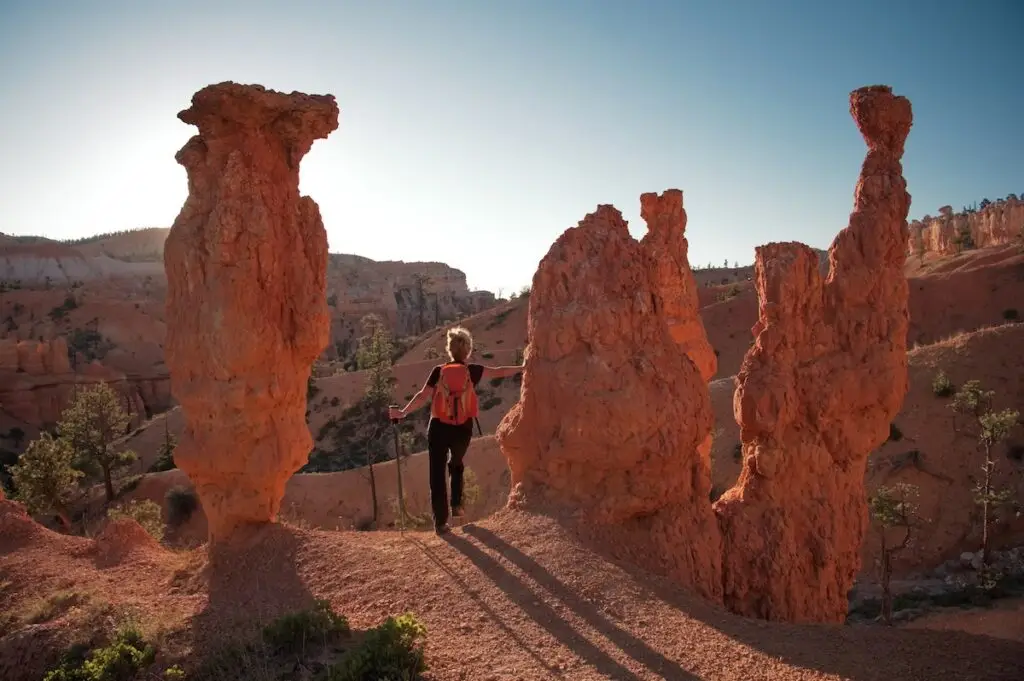
Bryce Canyon National Park stands as a world-renowned showcase for some of the most extraordinary hoodoo formations on the planet. Here, the landscape is a living gallery of nature’s artistry, where millions of years of erosion have sculpted the canyon into a maze of towering spires, fins, and pinnacles. The hoodoos in Bryce Canyon are especially famous for their dramatic heights, with some formations exceeding 100 feet, creating a surreal skyline that leaves first-time visitors in awe.
The heart of this spectacle is the Bryce Amphitheater, easily accessible via the park’s scenic drive along Utah’s All-American Road. As you wind your way through the park, each overlook reveals a new perspective on the ever-changing landscape, where erosion continues to shape and reshape the canyon’s rock formations. The interplay of limestone, sandstone, and shale layers gives rise to a vibrant palette of reds, oranges, and creams, making every visit a unique visual experience.
For those eager to explore, the park offers a variety of trails that weave through the hoodoos, allowing you to witness up close the intricate details and sheer scale of these formations. Whether you’re gazing out over the rim or wandering among the spires, Bryce Canyon’s hoodoos offer a landscape unlike any other in the world—a testament to the enduring power of natural forces and the beauty they create.
National Parks in the Region: Gateways to Hoodoo Country
Southern Utah is a treasure trove of national parks, each offering a unique gateway into the heart of hoodoo country. Bryce Canyon National Park, with its iconic rock formations and expansive views, is just one highlight in a region rich with natural wonders. Nearby, Zion National Park beckons with its deep canyons and soaring cliffs, while Arches National Park dazzles visitors with its gravity-defying stone arches and sculpted landscapes. All of these parks are expertly managed by the National Park Service, ensuring that their beauty and accessibility are preserved for generations to come.
The park entrance to Bryce Canyon National Park is conveniently located near Bryce Canyon City, a small town that serves as a welcoming hub for travelers. Here, visitors can find everything they need for their adventure, from lodging and dining to park information and guided tours. The region’s proximity to the Grand Canyon further enhances its appeal, offering the chance to experience some of the most breathtaking vistas in the United States.
Set atop the Colorado Plateau, these parks are united by a shared geological heritage, where ancient forces have carved deep canyons and sculpted distinctive rock formations. Exploring this landscape means journeying through a tapestry of color, texture, and history—whether you’re hiking a rugged trail, embarking on a scenic drive, or simply soaking in the panoramic views. For those seeking to connect with the wild beauty of Utah, the national parks of southern Utah are the ultimate starting point.
Cultural Significance: Hoodoos in Native Legends and Modern Lore
Native American Myths and Legends
The hoodoos of Southern Utah are deeply embedded in the rich cultural heritage of the Native American communities that have inhabited the region for thousands of years. According to Paiute lore, the hoodoos were once the “Legend People” or *To-when-an-ung-wa*, who were transformed into stone by the Coyote God as a punishment for their misdeeds.
This mythological narrative is a central part of Paiute oral tradition, passed down through generations to explain the origin of these enigmatic rock formations. The Coyote, often depicted as a trickster figure, is said to have petrified the Legend People for their selfish and harmful actions, such as consuming all the water and food that the animals needed to survive.
This legend is not just a simple tale but a reflection of the Paiute people’s deep connection with the land and their spiritual beliefs. The hoodoos, known as *Anka-ku-was-a-wits* or “red painted faces,” are considered sacred and are often associated with the spiritual and mystical aspects of Paiute culture.
The telling of these stories is a revered tradition, typically reserved for the winter months, as it is a time for sharing tales and passing down cultural knowledge.
Inspiration for Modern Tales and Art
Beyond their significance in Native American mythology, the hoodoos have also inspired a wide range of modern artistic and literary works. The unique and otherworldly appearance of these rock formations has captivated the imagination of writers, artists, and filmmakers. For instance, the hoodoos of Bryce Canyon National Park have been a source of inspiration for various forms of storytelling, from folklore to contemporary literature and film.
The eerie and majestic landscape of the hoodoos often serves as a backdrop for tales of mystery, transformation, and the supernatural.
In addition, the cultural and spiritual significance of the hoodoos has influenced visual artists and musicians. The symbolism and mystique surrounding these formations have been incorporated into various art pieces, reflecting themes of identity, resilience, and the connection between nature and human experience.
This blend of natural wonder and cultural heritage continues to inspire creative works, ensuring that the hoodoos remain not just geological marvels but also vibrant elements of our collective cultural narrative .
Adventuring Among the Hoodoos: Tips for Visitors
Best Trails and Viewing Spots
If you’re planning to explore the hoodoos of Southern Utah, there are several trails and viewing spots that you shouldn’t miss. One of the most popular and accessible hikes is the Toadstool Hoodoos Trail, located near Kanab, Utah, and Page, Arizona. This 1.8-mile round-trip hike is family-friendly and offers a flat, easy terrain with minimal elevation gain of just 141 feet.
The trail takes you through a unique badlands landscape and eventually to a plateau filled with vibrant, mushroom-shaped hoodoos.
For those seeking a more secluded and challenging experience, the Wahweap Hoodoos, also known as the Towers of Silence, are a must-visit. Located in a remote area, these hoodoos require a 10+ mile round-trip hike down a shadeless wash, which can be particularly demanding, especially when wet or during hot weather.
However, the solitude and the opportunity to photograph these ghostly white formations in the early morning light make the effort well worth it.
Bryce Canyon National Park is another prime destination, boasting the highest concentration of hoodoos in the world. Bryce Canyon’s hoodoos, also known as earth pyramids, fairy chimneys, or tent rocks, are tall, slender spires of rock that create a surreal landscape. These distinctive Bryce Canyon’s rock formations are famous for their vibrant colors and unusual shapes, inspiring awe in visitors and making them a signature attraction of the park.
The Rim Trail in Bryce Canyon stretches 5.5 miles one-way and connects the park’s most popular viewpoints, including Sunrise Point and Sunset Point, offering panoramic views of the amphitheater filled with hoodoos. The Sunrise Point to Sunset Point Trail is a 1.1-mile round trip hike that provides expansive views of the amphitheater and is perfect for those seeking a shorter walk.
The Navajo Loop Trail is a 1.5-mile round trip hike that descends into the canyon and features notable formations like Wall Street and Thor’s Hammer. This trail can be combined with the Queen’s Garden Trail, a 0.9-mile one-way hike that leads to the Queen Victoria hoodoo. The Queen’s Garden Trail is considered one of the easiest and most rewarding hikes in Bryce Canyon, making it ideal for families and beginners.
For a longer adventure, the Fairyland Loop Trail is an 8-mile round trip hike that offers unique vantage points of the hoodoos and other rock formations. The park’s scenic drive provides access to major overlooks and short walks to viewpoints, allowing visitors to experience the beauty of Bryce Canyon’s hoodoos and rock formations from multiple perspectives.
When to Visit and What to Bring
The best time to visit the hoodoos in Southern Utah depends on your preferences and what you’re prepared for. Spring and fall are generally the best seasons, as the weather is mild and the trails are less crowded. Avoid visiting during the peak summer months if you can, as the heat can be intense and the trails are more exposed.
If you do plan to visit during summer, it’s important to carry more water than usual and to hike early in the morning or late in the afternoon to avoid the harsh midday sun.
For photography enthusiasts, the late afternoon and early morning hours are ideal for capturing the hoodoos in the best light. Sunrise and sunset offer soft, golden light that enhances the colors and textures of the rock formations.
However, be prepared for the light to change quickly, especially during sunrise, as the sun rises above the horizon and casts long shadows across the landscape.
In terms of gear, make sure to bring sturdy hiking shoes or boots, especially if you plan to hike after rainfall, as the trails can become very muddy and slippery. Bring plenty of water, snacks, and sun protection, including hats, sunglasses, and sunscreen.
A camera and tripod are also essential for capturing the stunning scenery. For those visiting the Toadstool Hoodoos, it’s a good idea to bring a towel to clean off any mud from your shoes or pets .
Luxury Accommodations: Gateway to Comfort and Adventure
After a day spent exploring the wonders of Bryce Canyon or hiking the trails of Zion National Park, there’s nothing quite like returning to the comfort of a luxury accommodation nestled in the heart of southern Utah. The region offers a variety of upscale options, from elegant lodges and boutique hotels to private vacation rentals with sweeping views of the canyon landscape. The Bryce Canyon Lodge, located near the park entrance, is a favorite among visitors, blending rustic charm with modern amenities for a truly memorable stay.
For those seeking a more personalized experience, the small towns surrounding the national parks—such as Bryce Canyon City and Springdale—offer a range of boutique hotels and luxury rentals. These accommodations provide not only comfort and convenience but also easy access to the area’s most scenic drives, hiking trails, and local attractions. Whether you’re planning a romantic getaway or a family adventure, you’ll find that southern Utah’s luxury lodgings are the perfect base for both relaxation and exploration.
Imagine waking up to the sunrise over Bryce Canyon’s hoodoos, enjoying a gourmet breakfast, and then setting out for a day of discovery along the rim trail or through the deep canyons of Zion. With the right accommodations, every moment of your trip becomes an experience to savor—combining the thrill of adventure with the pleasures of comfort and hospitality.
Conclusion: Preserving the Wonder of Hoodoos for Future Generations
The hoodoos of Southern Utah are a testament to the awe-inspiring power of nature and the rich cultural heritage of the region. As we marvel at these unique formations, it is important to remember the delicate balance between human exploration and environmental preservation. To ensure the longevity of these natural wonders, it is essential to stay on designated trails, avoid touching or climbing on the hoodoos, and respect the fragile ecosystems surrounding them.
By taking these steps, we can help preserve the beauty and mystique of the hoodoos for future generations to enjoy. Let us cherish and protect these natural sculptures, so they continue to inspire and captivate us for years to come.
The hoodoos of Southern Utah are deeply embedded in the rich cultural heritage of the Native American communities that have inhabited the region for thousands of years. According to Paiute lore, the hoodoos were once the “Legend People” or *To-when-an-ung-wa*, who were transformed into stone by the Coyote God as a punishment for their misdeeds.
This mythological narrative is a central part of Paiute oral tradition, passed down through generations to explain the origin of these enigmatic rock formations. The Coyote, often depicted as a trickster figure, is said to have petrified the Legend People for their selfish and harmful actions, such as consuming all the water and food that the animals needed to survive.
This legend is not just a simple tale but a reflection of the Paiute people’s deep connection with the land and their spiritual beliefs. The hoodoos, known as *Anka-ku-was-a-wits* or “red painted faces,” are considered sacred and are often associated with the spiritual and mystical aspects of Paiute culture.
The telling of these stories is a revered tradition, typically reserved for the winter months, as it is a time for sharing tales and passing down cultural knowledge.
Inspiration for Modern Tales and Art
Beyond their significance in Native American mythology, the hoodoos have also inspired a wide range of modern artistic and literary works. The unique and otherworldly appearance of these rock formations has captivated the imagination of writers, artists, and filmmakers. For instance, the hoodoos of Bryce Canyon National Park have been a source of inspiration for various forms of storytelling, from folklore to contemporary literature and film.
The eerie and majestic landscape of the hoodoos often serves as a backdrop for tales of mystery, transformation, and the supernatural.
In addition, the cultural and spiritual significance of the hoodoos has influenced visual artists and musicians. The symbolism and mystique surrounding these formations have been incorporated into various art pieces, reflecting themes of identity, resilience, and the connection between nature and human experience.
This blend of natural wonder and cultural heritage continues to inspire creative works, ensuring that the hoodoos remain not just geological marvels but also vibrant elements of our collective cultural narrative .
Adventuring Among the Hoodoos: Tips for Visitors
Best Trails and Viewing Spots
If you’re planning to explore the hoodoos of Southern Utah, there are several trails and viewing spots that you shouldn’t miss. One of the most popular and accessible hikes is the Toadstool Hoodoos Trail, located near Kanab, Utah, and Page, Arizona. This 1.8-mile round-trip hike is family-friendly and offers a flat, easy terrain with minimal elevation gain of just 141 feet.
The trail takes you through a unique badlands landscape and eventually to a plateau filled with vibrant, mushroom-shaped hoodoos.
For those seeking a more secluded and challenging experience, the Wahweap Hoodoos, also known as the Towers of Silence, are a must-visit. Located in a remote area, these hoodoos require a 10+ mile round-trip hike down a shadeless wash, which can be particularly demanding, especially when wet or during hot weather.
However, the solitude and the opportunity to photograph these ghostly white formations in the early morning light make the effort well worth it.
Bryce Canyon National Park is another prime destination, boasting the highest concentration of hoodoos in the world. Here, you can choose from a variety of trails, ranging from easy day hikes to more strenuous multi-day backpacking trips.
The park’s scenic vistas and the unique red rock formations make it an ideal spot for both casual visitors and serious hikers.
When to Visit and What to Bring
The best time to visit the hoodoos in Southern Utah depends on your preferences and what you’re prepared for. Spring and fall are generally the best seasons, as the weather is mild and the trails are less crowded. Avoid visiting during the peak summer months if you can, as the heat can be intense and the trails are more exposed.
If you do plan to visit during summer, it’s important to carry more water than usual and to hike early in the morning or late in the afternoon to avoid the harsh midday sun.
For photography enthusiasts, the late afternoon and early morning hours are ideal for capturing the hoodoos in the best light. Sunrise and sunset offer soft, golden light that enhances the colors and textures of the rock formations.
However, be prepared for the light to change quickly, especially during sunrise, as the sun rises above the horizon and casts long shadows across the landscape.
In terms of gear, make sure to bring sturdy hiking shoes or boots, especially if you plan to hike after rainfall, as the trails can become very muddy and slippery. Bring plenty of water, snacks, and sun protection, including hats, sunglasses, and sunscreen.
A camera and tripod are also essential for capturing the stunning scenery. For those visiting the Toadstool Hoodoos, it’s a good idea to bring a towel to clean off any mud from your shoes or pets .
Conclusion: Preserving the Wonder of Hoodoos for Future Generations
The hoodoos of Southern Utah are a testament to the awe-inspiring power of nature and the rich cultural heritage of the region. As we marvel at these unique formations, it is important to remember the delicate balance between human exploration and environmental preservation. To ensure the longevity of these natural wonders, it is essential to stay on designated trails, avoid touching or climbing on the hoodoos, and respect the fragile ecosystems surrounding them.
By taking these steps, we can help preserve the beauty and mystique of the hoodoos for future generations to enjoy. Let us cherish and protect these natural sculptures, so they continue to inspire and captivate us for years to come.